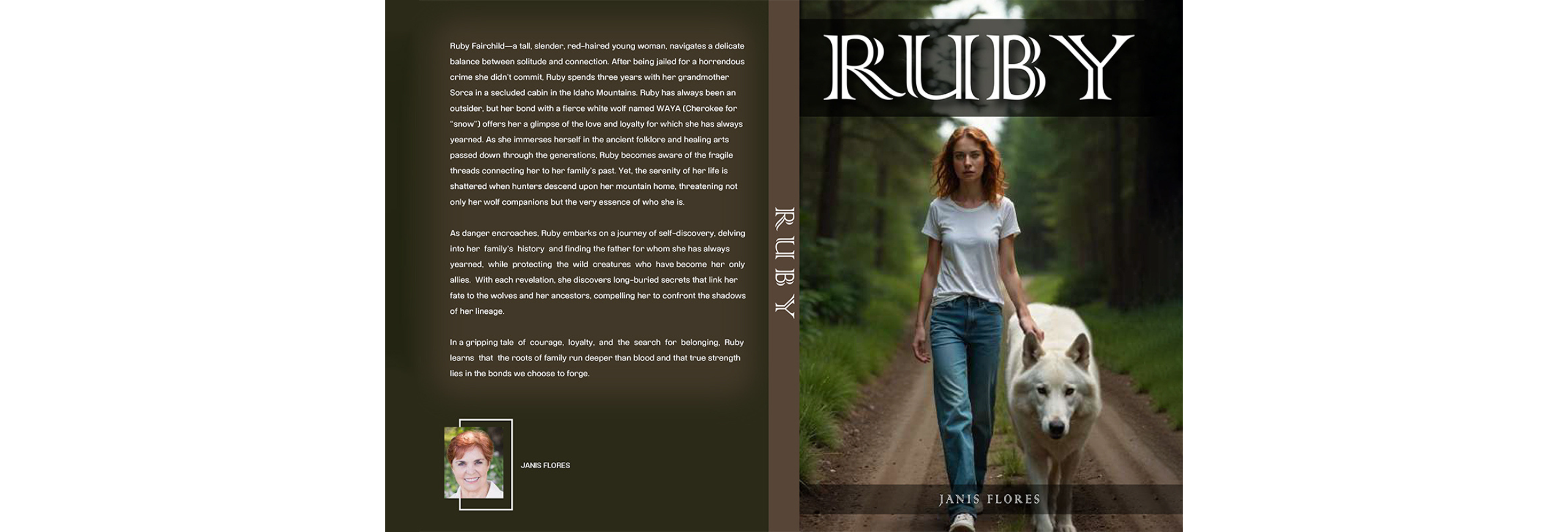

You can hear a heartbeat in the clearing. The air is keen and metallic, and the snow sticks to the branches like lace. And there was a white wolf, who seemed like he was frozen in time, with eyes that held something older than words. This is not scary for Ruby Fairchild, who is twelve years old and has already been betrayed too many times. It’s a sign of respect. A moment that feels less like discovery and more like the universe finally delivering what it owed.
That’s where Janis Flores’s new novel Ruby sinks its teeth in a girl’s first encounter with Waya, the wolf who becomes something more than an animal, a guardian, a mirror, a reminder that wildness may be the only honest refuge left. Readers have been calling the book “a feral hymn to survival,” and it’s hard to think of a sharper description.
Where the People Fail, the Woods Begin
Ruby doesn’t step into the forest because she’s curious. She runs because she has to. Her mother, Dixie, drinks hard, loves harder, and lashes out in ways that leave marks Ruby can’t hide. Men drift in and out, most of them in trouble. Sorcha, the grandmother in the mountain cabin, locks her doors instead of opening them. Every human who should have stayed steady instead cracks or turns away.
And so Ruby turns to the wilderness not out of choice, but out of sheer necessity. That’s what makes Ruby Ring so different from other survival tales. There’s no romanticized notion of the woods as escape, no childlike dream of adventure. It’s a refuge. The last safe place. A clearing, a pond, a pair of wolves whose very indifference becomes a kind of dignity.
Flores writes the forest not as backdrop but as co-conspirator. The trees bend with the weight of Ruby’s silence. Snow muffles the sounds of domestic chaos. The wolves watch her not saving, not soothing, simply witnessing. And sometimes that’s all a child needs: proof that someone, or something, sees them without turning away.
The Sacredness of Being Seen
There’s a scene that lingers long after the book is closed. Ruby sits in her secret clearing, shivering but refusing to move, waiting for Waya to return. She doesn’t demand affection. She doesn’t beg. She waits. When he finally steps out of the trees and settles beside her, the act carries more weight than any declaration of love could. The wolf allows her presence. That’s it. That’s everything.
In a world where loyalty is shouted and rarely shown, the wolves’ simple acceptance hits like a revelation. They don’t soften who they are. They don’t bend into something palatable. They remain wild, and in their wildness, Ruby finds a kind of constancy no human has managed to give her.
This is what makes Ruby more than just a story about wolves. It’s a meditation on the rare gift of being seen exactly as you are.
Nature as Co-Parent
We don’t often think of wilderness as a caregiver. Parents, teachers, and churches are the institutions we expect to raise a child. But ask anyone who’s walked through grief, through neglect, through nights that felt endless, and you’ll hear it: sometimes it’s the woods that hold you.
In Ruby, nature becomes co-parent in the truest sense. The forest doesn’t lecture. It doesn’t demand. It simply provides shelter, rhythm, and beauty that remains unbroken even when everything human collapses. Waya and Luna, the wolves, extend that provision. They don’t, Mother Ruby, exactly. They don’t father her either. They embody a different kind of kinship. One rooted in presence, not promises.
It’s an idea that resonates far beyond the page. Children abandoned by their families often learn to parent themselves with scraps of comfort from elsewhere. A teacher who lingers after class. A neighbor who leaves food at the door. A stretch of creek where no one yells. Flores pushes this truth to its wild edge, showing how even wolves can take up the mantle when humans refuse.
The Author Behind the Howl
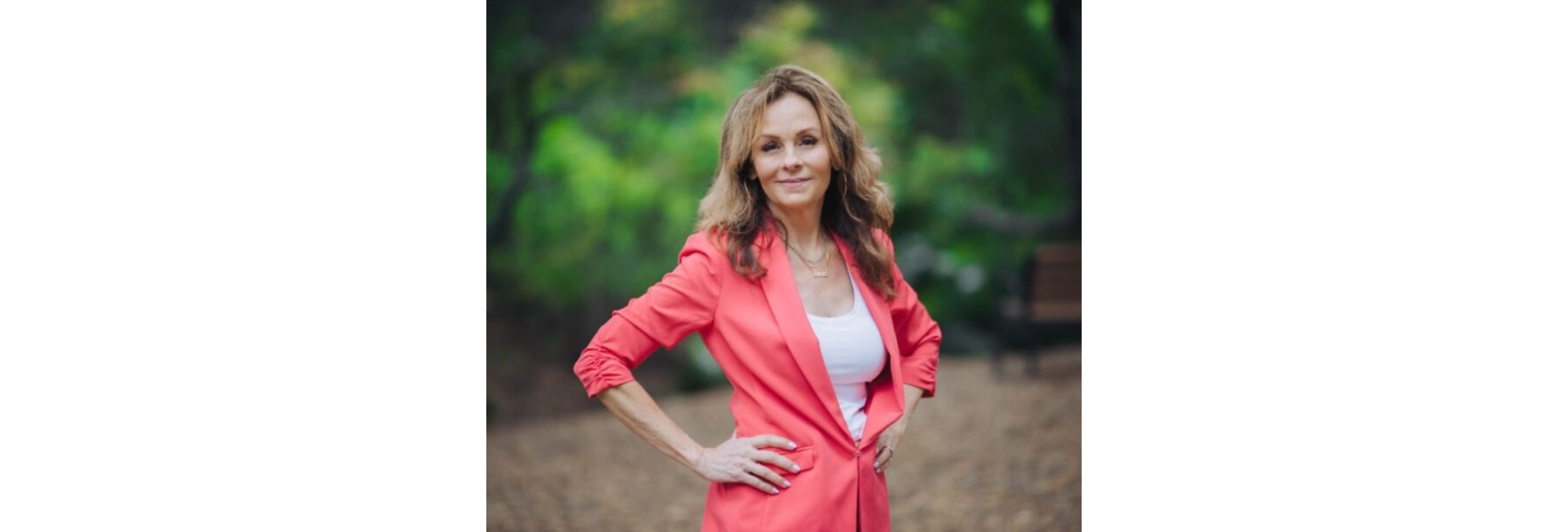
Janis Flores doesn’t write like someone guessing at hardship. Raised in the rural West, she knows the silence of small towns where secrets settle deep. She’s seen how beauty can coexist with brutality, how people who look steady from the outside can carry their own storms.
She’s been praised for her prose that moves between savage and tender in a single breath. And in Ruby, that balance is razor-sharp. Violence is never sensationalized, but it’s never softened either. Moments of wonder, a wolf’s gaze, a hush of falling snow carry as much weight as fists slamming against walls.
It’s this honesty that makes early readers compare Flores to Barbara Kingsolver or Delia Owens. Not because she imitates, but because she writes with the same unflinching respect for the natural world, and the same refusal to lie about the human one.
The Wolves Are Watching Us Too
The book is getting a lot of attention right now for a reason. Ruby reminds us of other areas where safety could be found in a culture where safety nets break down and familial ties might feel weak. In friendships that last longer than family. In landscapes that keep us stable when humans can’t. In the quiet, watchful eyes of the wolves we’ve chosen for ourselves.
Flores doesn’t think the wolves will save Ruby. They won’t. They can’t get rid of poverty, addiction, and abuse. But they give you something smaller, almost more radical: presence. And maybe that’s the message hidden in the lines: staying alive isn’t necessarily about being saved. Sometimes it’s enough to know that you’re not the only one fighting to stay alive.
A Feral Invitation
Ruby is not a quiet book. It doesn’t whisper reassurance or neatly conclude itself. It howls. It scratches at the locked doors of sanitized storytelling and demands you look at the mess, at the beauty, at the wilderness that raises us when nothing else will.
For readers who crave stories that challenge instead of coddle, Ruby offers precisely that. It’s been called “unforgettable,” “gritty,” “achingly beautiful,” but those words only circle the truth. The truth is this: once you meet Waya and Luna, once you see Ruby through their eyes, you’ll never quite forget the way the wolves watched.
Where to Find It
Janis Flores’s Ruby is available now, in print and digital editions. Ask your local indie bookstore, grab it from your favorite retailer, or request it at your library. Step into the clearing. Sit in the snow. Let the wolves see you.
Written in partnership with Tom White