
Image credit: Pixabay
The adaptive workspace is no longer a cultural signal or a progressive perk. It has quietly become an operational requirement that determines whether a company can function under pressure.
What once referred to flexible schedules or the ability to work from anywhere has evolved into something far more structural and far less visible. Today, adaptability is about how organizations design decision-making systems, how they govern access to information, and how they respond to constant shifts without introducing chaos into their operations.
Many companies are still operating under outdated assumptions, believing that adopting AI tools or enabling remote work is enough to qualify as adaptive. In reality, those changes often sit on top of fragile systems that were never designed for speed, scale, or complexity.
The organizations that are actually adapting are not simply moving faster, but rebuilding how work itself functions beneath the surface.
Why Adaptability Now Depends on Judgment, Not Just Speed
There is a growing misconception across industries that speed is the defining advantage in the age of artificial intelligence. The ability to generate outputs quickly, analyze data instantly, and automate decisions has created the illusion that faster automatically means better. In practice, the opposite is often true. Acceleration without structure exposes weak governance, amplifies flawed data, and compresses decision-making into cycles that leave little room for verification or accountability.
The organizations that are quietly outperforming others are not necessarily the ones moving the fastest, but the ones exercising the most control over how speed is applied. They are building systems that preserve clarity even as velocity increases, making sure that automation strengthens human judgment rather than replacing it.
Adaptability, in this context, becomes less about reacting quickly and more about designing workflows that can absorb constant change without eroding trust, visibility, or long-term stability. The real competitive advantage is not speed alone, but the ability to move quickly without losing coherence.
Governance and Async Execution in Modern Work
One emerging model for adaptive operations centers on asynchronous collaboration. Instead of relying on constant meetings and real-time coordination, teams are structuring work to support independent contributions from individuals while maintaining clear documentation and accountability.
Jonathan Gropper, Founder of TrueHOA, has applied this approach to homeowner association governance, a sector not typically associated with operational innovation. His company operates with an async-by-default model designed to reduce coordination drag and protect deep work.
Within this framework, meetings are treated not as evidence of productivity but as a measurable operational cost. Clear records, documented decisions, and transparent processes replace the need for frequent synchronous discussions.
As Gropper explains, “If you have a 10-person meeting for an hour, that’s 10 hours of work that just went nowhere. So that meeting, to be justified, really has to be worthwhile.” This perspective forces a level of discipline that most organizations avoid. It requires leaders to confront how much time is being consumed by coordination rather than actual output.
Gropper’s model replaces this coordination-heavy structure with an async-by-default system, where work progresses continuously across time zones without requiring constant alignment. “I personally don’t care what you do between 9 and 5 as long as you just get things done,” he says. Output, and not presence, defines performance.
In this environment, documentation becomes the backbone of operations, decisions are recorded rather than discussed repeatedly, and individuals are trusted to execute within clearly defined structures.
The deeper shift is about removing coordination as a bottleneck. Gropper captures this transition in a single line that reflects a broader movement toward system-based trust: “You don’t need trust anymore. You have proof.”
Safe Data Access Is Defining Workplace Capability
As organizations integrate AI into daily operations, access to the right data is emerging as a new challenge. Adaptive work increasingly depends on whether employees and automated systems can retrieve accurate information safely and efficiently.
Bethany Ayers, CEO of Metomic, argues that both accessibility and security are essential for AI to deliver meaningful value. Ayers explains, “The only way to make AI work and be beneficial is to have the right data access.”
Many organizations struggle with outdated permission structures, legacy sensitive data, and emerging threats such as prompt injection. Over-permissioning, where employees or systems have access to more data than necessary, can quietly create security risks while complicating AI adoption.
What makes this issue particularly complex is that most organizations are already sitting on fragmented, over-permissioned, and poorly structured data environments. AI does not create these weaknesses, but it exposes them immediately. Ayers illustrates this with a real-world example of a banking professional who used AI tools to explore internal systems and discovered far more access than expected. “He said, ‘I spend my afternoons just hammering it with questions to see what I have access to, and it is fantastic. You have no idea how much I have learned because of it,’” she recounts, before adding the critical caveat that defines the risk. “That’s great for him, but if you have a bad actor doing that, it can absolutely destroy your reputation.”
This is where the conversation around adaptability becomes more nuanced. It is not enough to enable access or increase speed. Organizations must simultaneously ensure that access is controlled, intentional, and secure.
Metomic’s recent product launch reflects growing industry efforts to address these issues by helping organizations manage data permissions and governance more effectively. As companies scale AI usage, trustworthy information architecture is becoming a core strength of adaptive workspaces.
As Ayers puts it, “You need to be able to use AI, you need to be able to be adaptive, but you have to do that in a way that’s safe, so that you don’t blow up your organization at the same time.” The companies that are getting this right are not slowing down innovation. They are strengthening the infrastructure that makes innovation sustainable.
Adaptability on the Factory Floor
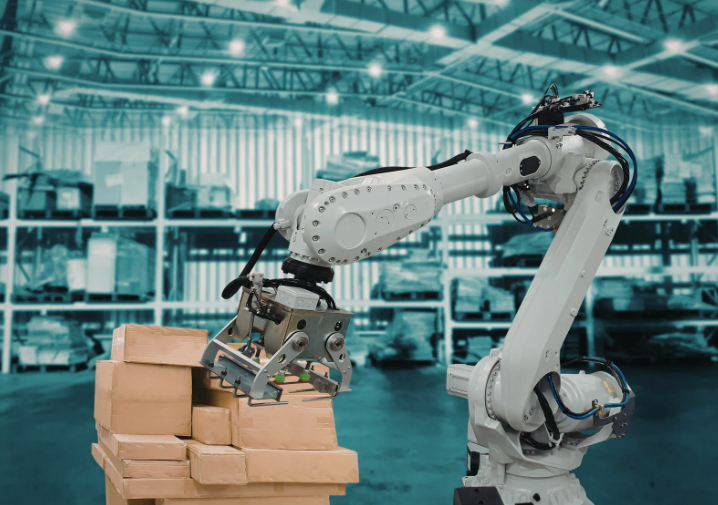
The concept of adaptive workspaces is often framed within the context of knowledge work, but its most immediate and tangible impact can be seen in manufacturing environments, where change is constant and unforgiving. On the factory floor, adaptability is not an abstract concept. It is a requirement driven by shifting consumer demand, supply chain variability, and operational constraints that can change from one day to the next.
Brian Jaworski, Senior Solutions Engineer at Formic, describes a reality where production systems must respond almost instantly to external signals. “You could have one of our customers running a certain product one day, and then their customer changes their mind or the consumer changes their mind on what they’re looking for the next day, and then they have to completely shift how they produce things,” he explains.
This level of variability introduces a different kind of pressure, one that cannot be solved through static systems or long planning cycles. “The consumer is really driving all production everywhere,” Jaworski says. External demand now dictates internal operations at a much faster pace than traditional manufacturing models were built to handle. In this environment, adaptability requires not only flexible systems but also new approaches to how labor and technology interact.
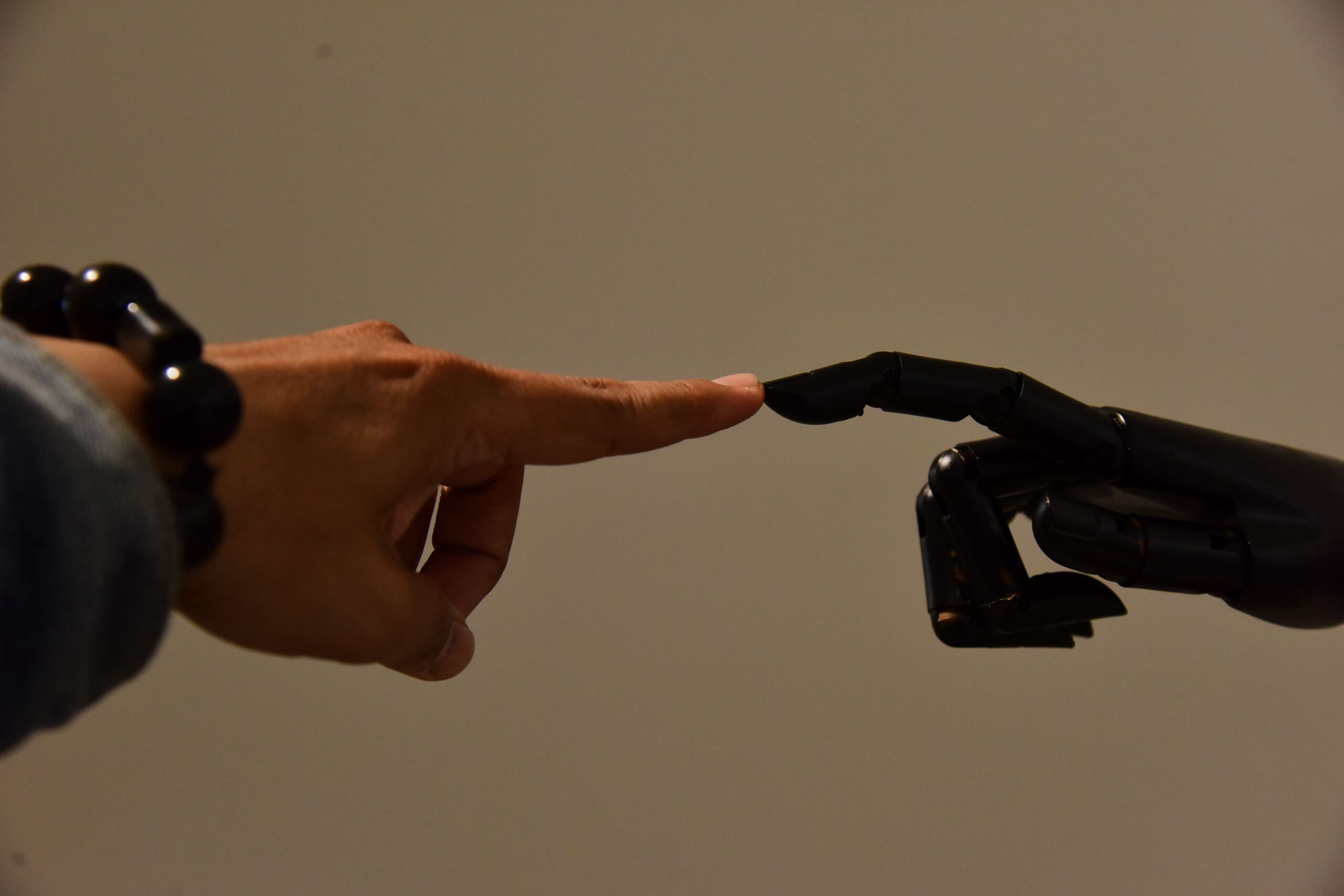
Contrary to common fears, automation is not primarily about replacing human workers. It is about redefining their roles within the system. “I don’t think anyone putting in robotics is looking to remove an operator from their place. I think all of this technology is really about eliminating the monotonous tasks, the dangerous tasks,” Jaworski explains, pointing to measurable improvements such as reduced injuries and increased productivity.
There is an apparent redistribution of human involvement. Workers move closer to decision-making, oversight, and optimization, while machines handle repetition and risk. In some cases, the cultural shift becomes visible in unexpected ways. Jaworski notes that teams often gather around new systems, even celebrating them. “We’ve had naming parties for the robots,” he says, describing how initial hesitation often gives way to acceptance and even enthusiasm once the benefits become tangible.
When systems are designed well, you get adoption instead of resistance.
What Thriving Adaptive Organizations Share
From HOA governance to enterprise cybersecurity and factory automation, successful adaptive organizations tend to share several characteristics. They actively reduce unnecessary friction in daily operations by designing systems around transparency and accountability. They use artificial intelligence to extend human capabilities rather than replace them. And they preserve flexibility without allowing processes to devolve into chaos.
The Future of Work Will Reward Flexible Systems
Adaptive workspaces are no longer defined simply by remote policies or collaboration software. The next phase of workplace evolution will likely favor organizations that can move quickly while still protecting trust, autonomy, and responsible decision-making. Adaptability has shifted from reacting faster to building systems strong enough to flex without breaking.