
Image credit: Pexels
From creative production and auditing to consumer data and healthcare, early adopters are using AI to remove bottlenecks while keeping human judgment at the center.
Artificial intelligence is moving from novelty to necessity as businesses across industries discover that its value lies less in replacing human talent than in amplifying it. From creative agencies and law firms to healthcare platforms, early adopters are using AI to cut costs, eliminate bottlenecks, and free employees for higher-value work. The challenge now is not whether to adopt the technology, but how to implement it responsibly while maintaining human oversight.
Creativity Meets Automation
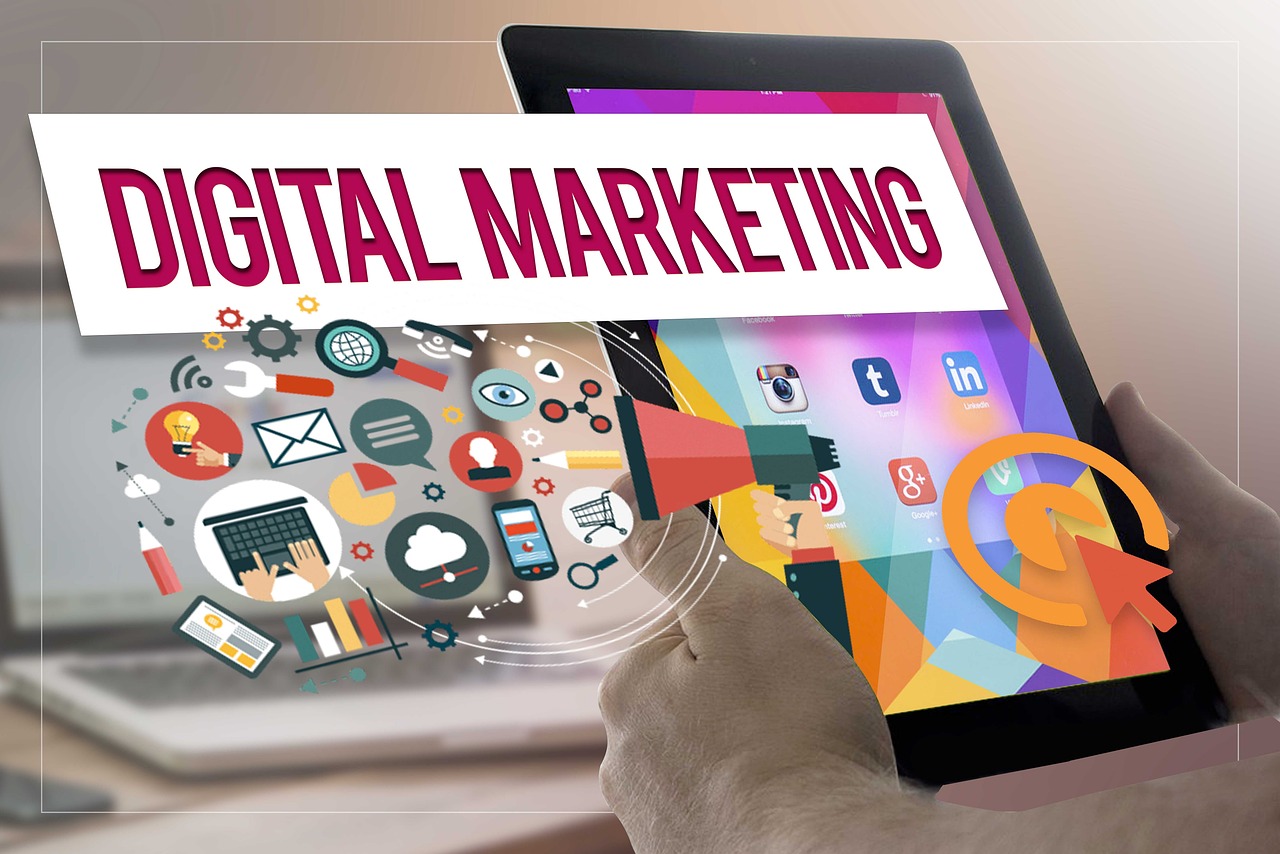
In Singapore, digital marketing firm pdm.la is applying AI to creative production, one of the technology’s most disrupted fields. Founder Adam Stanger has seen roughly 40% of Hollywood’s workforce leave the industry or stop working over the past three years as AI automates content production.
His approach is to adapt rather than resist, with human taste remaining central to the process. Using local AI and cloud tools, his team can now produce a month’s worth of short-form video content in about 30 minutes.
As Adam Stanger revealed: “In the machine over here, I have a thing we call the factory, and it basically has an Amazon S3 bucket, automation software, and text-to-speech so that we can generate 15-second vertical videos for YouTube or Instagram like that. I mean, create a month’s worth of stuff in maybe a half an hour.”
For Stanger, efficiency does not mean eliminating creative judgment.
“You can’t automate instinct and you can’t program taste.” — Adam Stanger, Founder, pdm.la.
The shift comes against a broader disruption in the entertainment industry.
“In the past three years or so, about 40% of the Hollywood workforce has either left the industry or is not working. That’s pretty scary. But having said that, I don’t think that Hollywood is going to be like Detroit in the sense of it being totally hollowed out,” Stanger added.
Turning Audit Work Into Strategic Work
At audit and risk firm Torvia, co-founder Liam Collins has approached AI from a different source of inefficiency, focusing on overcoming the challenge of manual, paper-based workflows and unstructured data. His AI platform automates 90% of manual control testing, allowing auditors to spend more time on strategic work and predictive risk analysis.
According to Liam Collins: “Internal auditors, they’re seen as a cost center in a company. Being able to test controls with AI removes probably 90% of the manual work that they were doing. That frees them up to do so much more than they would have been able to do in the past.”
This efficiency, however, does not remove human accountability.
“In my specific area of auditing, it’s a requirement that the human is making the final decision. The regulatory standards say it has to be human. It cannot be AI that makes the decision. Everything in our platform has to be approved, surfaced up for the human to review.”
The changing economics are also putting pressure on traditional consulting models.
“The consulting firms are typically all charged by the hour. Now, they’re having to completely revise their business model because their clients are saying, hey, you’re using AI to get so much more efficient, yet you’re charging the same amount of money. How does that work?”
A Digital Assistant, Not a Replacement
Washington, D.C.-based trademark attorney Erik Pelton has taken a measured route to adoption. His firm waited for AI tools to become sufficiently accurate, reliable, and safe before using them for repetitive administrative work.
The objective is to give staff more time for the personal client relationships behind the firm’s 25-year track record.
Erik Pelton shared: “We’ve been sort of waiting cautiously on the sidelines, waiting to make sure the time was right, that the tools are mature enough, safe enough, and that we could have a thoughtful enough process to make sure that what we’re doing protects our ethical obligations and provides a return on investment.”
Pelton compares the technology to a capable but supervised employee.
“We treat it like having a great intern. It can be great at producing work, but it needs good direction, good supervision, and good feedback. We are ultimately responsible for its output and supervising it,” Pelton added.
Adoption itself can present a hurdle, particularly when employees fear that automation could affect their roles.
“Surprising, you know, I’m 53 years old, the staff is generally younger than me, and they’ve generally been more resistant to adopting the AI tools. Whether that’s because there’s just an embedded fear that it’s going to take away from somebody’s work, or maybe it’s part of this generational divide we’re seeing with where the future lies,” said Pelton.
Cleaning Up Consumer Data
For consumer goods data platform foodgraph, AI is addressing unreliable product information, a costly workflow problem. The company is building the first national CPG product catalog in the U.S., using large language models to validate millions of product attributes each month.
Co-founder David Goodtree says the goal is to combine AI’s processing capability with human expertise.
“What we want to do is accelerate human productivity and embed our domain knowledge in the logic. The domain knowledge is what you know, and the LLM does not. It’s embedding what you do with your data in the reasoning engine of LLMs.”
This approach keeps people involved in validating AI outputs.
“Keep the humans in the loop. You have to be very careful when to let AI run on its own. It needs to be well-validated repetitively over time until you can say, I now trust you. Always include guardrails: stating assumptions, showing sources, asking it to express confidence.”
Goodtree’s description captures the balance between capability and limitation.
“Our VP of Product Management calls AI our smart and dumb friend. It’s smart about some things if you teach it, but it’s dumb about meaning and data. It doesn’t understand.”
Tackling Healthcare’s Administrative Burden
Healthcare startup QuickIntell is targeting the $1.2 trillion annual administrative burden in U.S. healthcare. CEO Rahul Agrawal’s platform uses autonomous AI agents to process unstructured data from electronic health records and automate revenue cycle management tasks that consume 6–8% of hospital budgets.
The system has evolved from an AI-assist tool into a full orchestrator, with humans handling tasks AI cannot yet perform.
Rahul Agrawal explained: “We are using agents to look at these unstructured data streams from the EHR side and other sources. And we are producing great outcomes for hospitals and clinics, saving them costs, reducing human errors, and thereby helping them get paid on time and get paid appropriately.”
Agrawal also sees AI as a way to broaden access to capabilities once limited by resources.
“It’s a great equalizer. Earlier, someone who had the hunger to grow, but didn’t have the intelligence or resources or right connections, they would have been left behind. But today, everything is available at their fingertips.”
His longer-term vision places routine healthcare administration increasingly in the hands of autonomous systems.
“A doctor will just dictate notes to a speaker, and everything right from billing, to coding, to claim submissions, denial management, appointment booking, everything will be done by the EHR itself. A doctor will be just carrying a microphone, and there will be no laptops, no computers—everything will be done autonomously.” Agrawal added.
Efficiency With Human Judgment
AI’s early adopters have realized that the technology’s greatest value is not necessarily replacing people, but removing the friction that keeps them from doing their best work. Whether automating audit trails, validating product data, streamlining content production, or reducing healthcare administration, AI delivers its strongest results when paired with clear human judgment, careful oversight, and a willingness to start small and iterate.