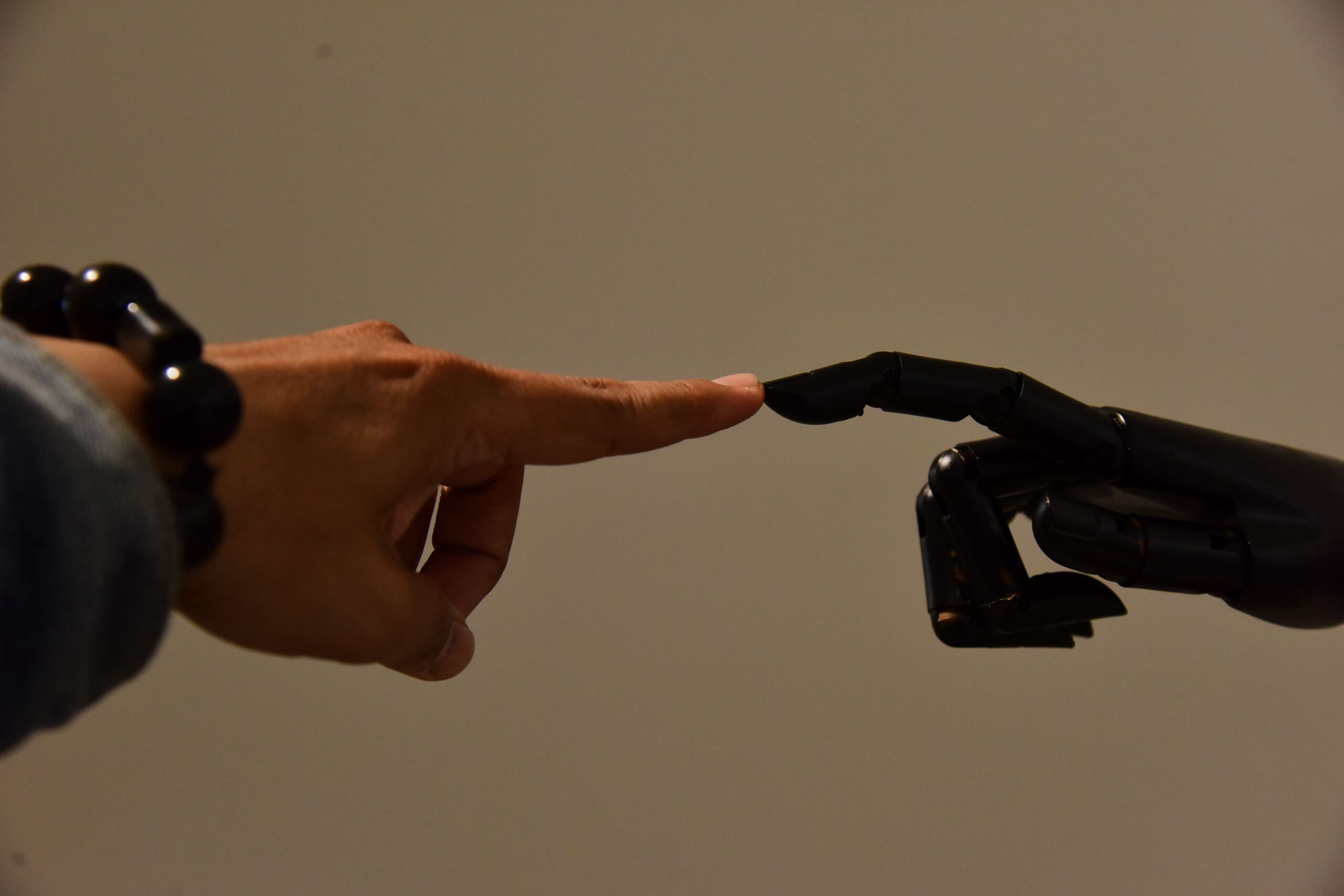

How a subset of innovators is using AI tools to enhance human-led creativity, rather than simply phasing it out altogether.
Over the past several years, artificial intelligence has begun to reshape numerous fields and professions, including creative ones. This has sparked much discussion and controversy about whether such technology is harmful in these spaces. Many human intelligence-based artists fear that the growing prominence of AI tools could lead to the replacement of human beings in creative work altogether.
At the intersection of these ideas, though, numerous innovators are using AI not to take the artist’s place, but to amplify human-led creativity. From music education and film production to AI platform design and growth marketing, innovators are converging on a new paradigm: AI as amplifier, not author. For the professionals working at this intersection, the challenge is no longer whether AI belongs in the creative process; it’s how to deploy it without losing what makes human creativity irreplaceable.
Improving Scalability Without Sacrificing Human Connection
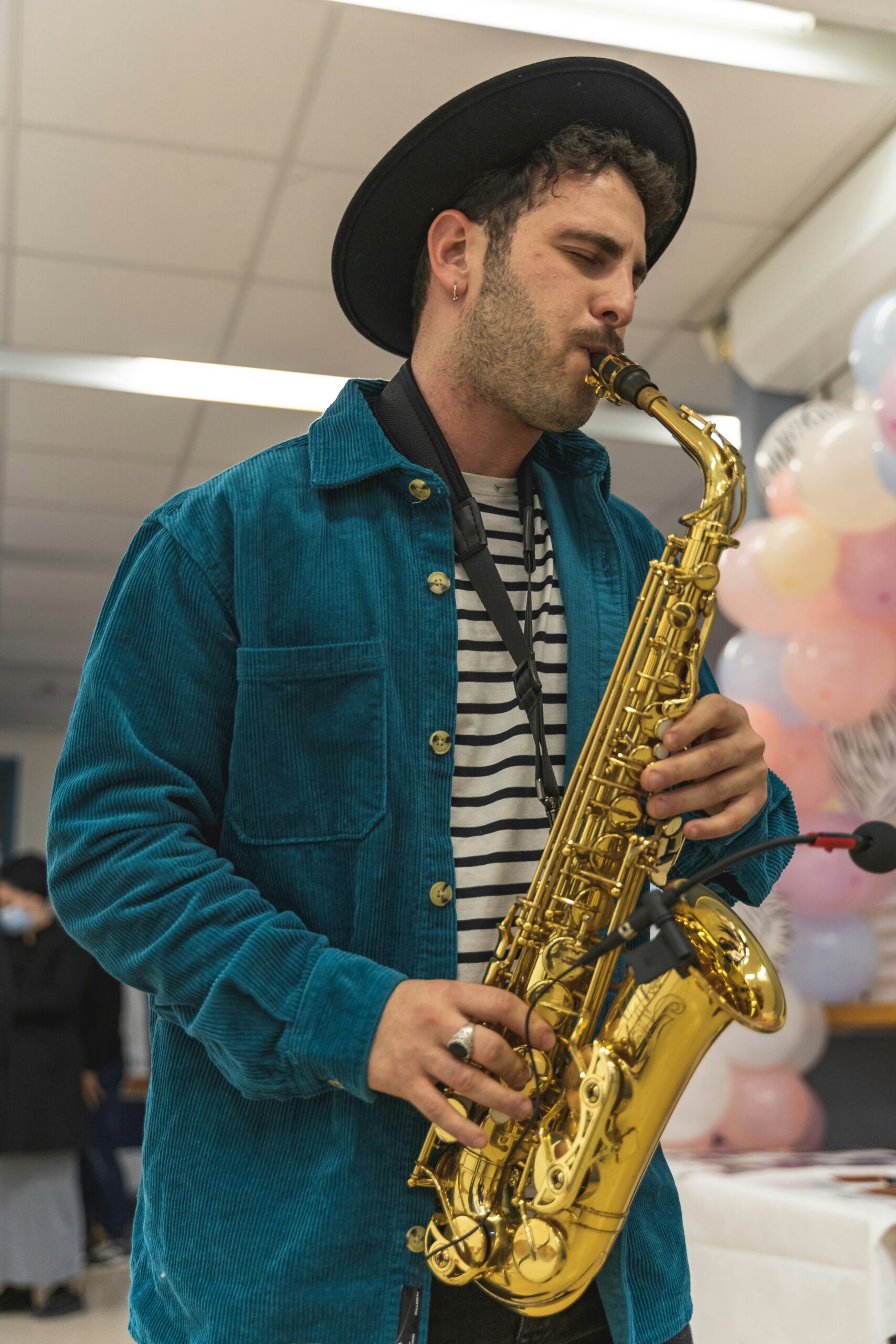
For musicians and educators, creative flow is the foundation of artistic work, and AI threatens to disrupt it even as it promises to support it. John von Seggern, founder of Futureproof Music School, sees AI’s clearest value in the administrative layer of a musician’s career: social media, marketing research, and promotional content.
He details, “Our students are interested in using it to do things to help them with their music, not necessarily with the creative part, but with all the menial, boring parts that kind of surround music.”
When it comes to creation itself, the 30-second lag of current AI tools breaks the “flow state” that musicians depend on. Futureproof Music School itself integrates AI to personalize music education at scale, adapting to each student’s skill level and musical taste, while keeping human teachers central to workshops and mentorship.
“For me, the creative process is a question of trying to get into that flow state, where you’re bringing up ideas seemingly magically from your subconscious. It’s directly from my subconscious to my fingers, instead of being translated through some abstraction layer,” von Seggern explains.
The result is a model where AI handles scalability without sacrificing the human connection that makes music education meaningful. Adaptation, von Seggern argues, is essential: artists who ignore new tools risk being left behind.
“The biggest problem I’ve seen in people’s careers is that musicians usually start out playing the kind of music that they love when they’re growing up, but if they get stuck just doing that, then ultimately they don’t have a career anymore because the world changes. If you’re the kind of person that can keep updating yourself and doing new things, then you can have a long career.”
AI for Unlocking Possibilities
Not all AI is built for raw intelligence. Sean White, whose background spans a PhD in computer science, music production, and philosophy, leads Inflection AI’s mission to develop emotionally intelligent systems: tools designed to understand user intent, support long-term relationships, and act more like a trusted coach than a search engine.
“Most of these companies were focusing on IQ; how do you make it smarter? And here at Inflection, we really spent a lot of time thinking about Emotional Intelligence: how do you better understand the intentions of the person, make that a better interface, and have that long-term conversation that’s not just transactional but relational over time,” White says.
For creatives, White sees AI’s most profound contribution not in efficiency gains but in unlocking possibilities that didn’t previously exist: finishing an abandoned song, breaking through a creative block, or accessing honest feedback that’s hard to get from people. But White is clear that the human must remain the creative director.
“If your AI makes you 30% faster at work that you’re already doing, I guess that’s cool. But it’s infinitely more interesting if it lets you finish the song you abandoned 10 years ago, and that’s the magic.”
However, just as the brushstrokes in Van Gogh’s “Starry Night” create a direct link to the artist’s lived experience, White ultimately believes that the human hand in art preserves the vital connection that makes creativity meaningful.
“I think the human should always have a role; the core, the seed. It is the thing that is directive and gives agency to the creative process. When you sit in front of Van Gogh’s Starry Night and stare at the funny imprints in the paint, there was a human. Hundreds of years ago, he dragged his paintbrush across there. What was his story in that moment? There’s something wonderful about that human connection.”
AI as a Tool Not a Replacement
Music producer and DJ Ritty Quin brings a practitioner’s perspective to the AI-creativity conversation. Classically trained and shaped by London’s electronic music scene, Quin has navigated the full arc of music technology, from acoustic instruments to digital production to AI-assisted creation.
She shares, “I was born and raised in London. London has a very rich scene when it comes to electronic music. That’s kind of when I first dabbled into understanding rave culture, DJ culture, music production.”
Quin’s work with KOR Protocol sits at the intersection of artistic authenticity and technological experimentation. Signed to Fabled Records, Live Nation Asia’s record label, and a regular performer at festivals across Asia and the UK, including Creamfields Asia 2025, she represents the kind of artist who has always adapted to new tools while keeping human expression at the center.
“When I started taking my music production more seriously, I got signed to Live Nation Asia’s record label, Fabled Records. It’s been a journey of constantly evolving and adapting,” Quin details.
For her, AI’s value lies in what it enables, not what it replaces, expanding the creative palette without diminishing the human decisions that define an artist’s voice.
“I’m actually a classically trained pianist; most of my experience was in playing classical music. But then I made that transition to electronic music and DJ production.”
AI as a Co-Pilot
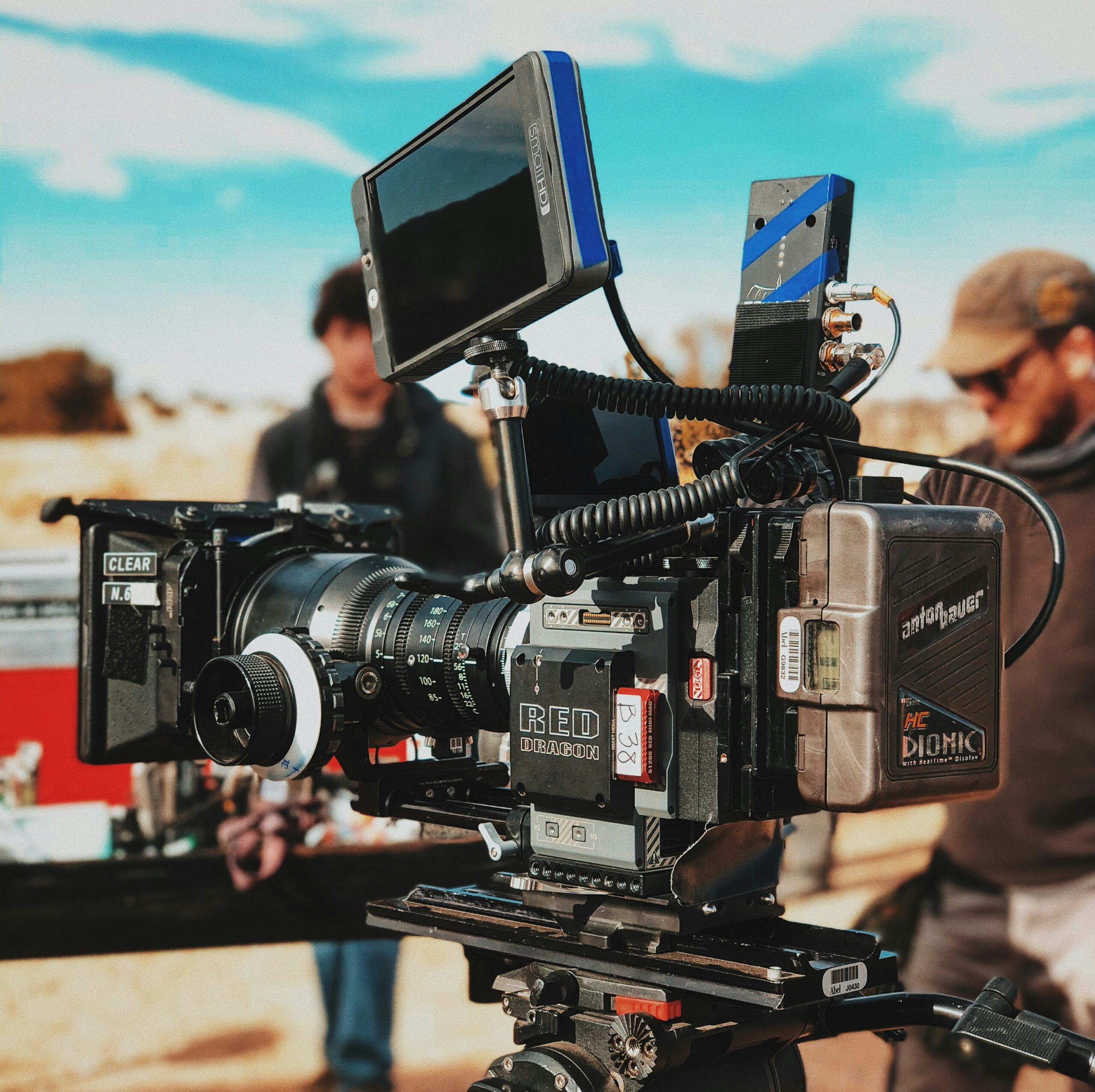
Independent creators have long lacked access to the tools available to major studios. Ryan Becker, founder of Wondergenn, is working to change that. Built by a single person using only AI tools, such as Claude and Copilot. Wondergenn aims to function as a “creative co-pilot,” helping filmmakers and marketers execute ambitious visions on a fraction of the traditional budget.
Becker details, “I’m trying to build a community where the writer who has an idea wants to work with a director in another state or another country; they can collaborate and work remotely. It’s embracing the international awareness of collaboration.”
The platform’s philosophy is deliberate: AI handles execution (storyboarding, stylizing, clip generation, special effects), while humans drive ideation and storytelling. Inspired by Ben Affleck’s vision of AI as a budget equalizer for filmmakers, Becker is building toward a distributed GPU collaboration network that would let creators pool resources and produce international productions from separate locations.
“For me, it’s not usually the ideas. I’ve tried to bounce ideas off AI; I haven’t always liked what they come up with. I don’t see AI creating the idea. It’s more about either testing out an idea at a lower budget, turning it into pitch reels, or testing out ads.”
Currently in beta, Wondergenn is already helping independent creators compete with major studios on their own terms.
Becker says, “While there are people out there talking about AI causing layoffs, if people are willing to learn the tools and use them, they might be able to take on the major companies.”
AI for Augmented Creativity
When Rodolfo Salazar increased his presentation output from one or two in ten months to forty in a single week using AI, it wasn’t just a productivity story; it was proof of concept for a new creative framework. As founder of QUDOX, Salazar has developed a three-tier model for understanding AI’s impact on creativity: organic (purely human), augmented (human plus AI), and synthetic (low-cost, easily replicated). His strategy is clear: focus on augmented creativity, where uniqueness and competitive edge live.
He details that “Organic creativity is purely human and rare. Augmented creativity, where humans use AI tools, represents the largest competitive space. Synthetic creativity produces easily copied, low-cost outputs. Our strategy is to focus on augmented creativity, where uniqueness and competitive edge live.”
Salazar argues that what makes human creativity irreplaceable is precisely what AI cannot replicate: empathy, nuance, and even the small mistakes that make work distinctive.
“Nuances and mistakes define human creativity’s beauty and uniqueness; they cannot be replicated by AI. Small mistakes create distinctive and meaningful creative work. AI can emulate, but it cannot truly replicate lived human experience or emotional connection.”
As AI becomes ubiquitous across industries, Salazar believes the next critical human skill will be managing AI systems with the same judgment and intuition we bring to managing people.
“Managing machines like people becomes a critical human skill as AI integration grows. This skill will define future leadership and operational success in AI-driven businesses.”
Final Thoughts
In fields like music, film, marketing, and technology, a clear truth is emerging: AI is most effective when it removes obstacles that hinder human creativity and allows what makes it valuable to flourish. Although the tools are becoming more intelligent, artists, educators, and entrepreneurs ensure that the human touch stays central. This balance, rather than the technology alone, looks likely to help shape the future.