
Image credit: Pixabay
AI usage has surged in the workplace, yet some teams and businesses remain unsure how best to use the tool in ways that work with, not against, existing workflows.
How AI Reinterprets Productivity
Over the past several years, AI use in professional settings has skyrocketed. Many of these tools are said to enhance productivity and streamline routine workflows, but how users obtain those benefits remains unclear in some industries.
Although there are many technical factors involved in AI’s performance, some business leaders believe how companies think about AI and what it can/should do plays a key role in determining how well said companies can utilize AI in the long term. This line of thinking often starts by questioning how the human element plays into technological advancements designed to do work on its own.
The Limits and Value of Automation
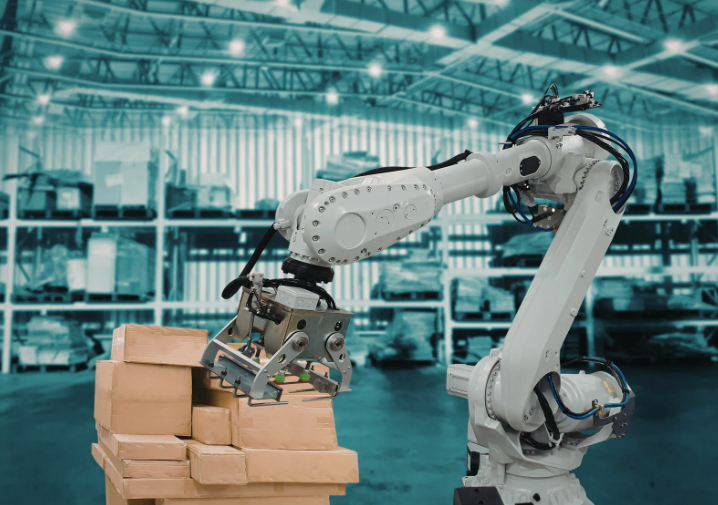
One of AI’s most frequently discussed features is automation, most notably via AI agents that can be programmed to complete certain tasks on their own. At face value, this may sound like a clear example of AI replacing human workers, but in truth, this relationship is more symbiotic than competitive.
Take, for example, a scenario presented by Neha Solanki, the digital marketing lead for SnapSeek. She highlights events like summer camps, where camp staff often send photos to attendees’ parents regularly, noting that it can take several hours a day to sort those photos manually.
She then explains how AI can reduce the time it takes to complete these and other repetitive tasks, freeing up time for human workers to spend on tasks that require human judgment and creativity.
“So you are reducing that three, four hours into 15 to 20 minutes,” Solanki concludes, highlighting AI’s efficiency when it comes to handling labor-intensive work.
“By giving these mediocre tasks to AI, you are being present in much more important activities on a day-to-day basis. Those tasks, AI can do much better.”
Emma Martin, the head of marketing at Gradient Labs, similarly points out two types of tasks, one of which benefits from more human oversight than the other. In the context of customer interactions in finance, she notes that “The first is a certain element of human-in-the-loop where needed, and the second is that certain things just don’t.”
These statements aren’t exaggerations either, as Gradient Labs has evidence to support them.
“[AI] agents are getting higher customer satisfaction scores than human teams,” Martin notes, highlighting how far simple tools like chatbots have come. “Humans are empowered to be subject matter experts, but agents are able to automate things in a way that… saves them a massive amount of time.”
Supporting Scalability
Another proposed benefit of incorporating AI into workflows is its ability to scale the value and scope of that work without necessarily scaling its costs at the same rate. Consider how many smaller businesses and founders traditionally had to outsource tasks to other agencies or hire additional staff, driving up costs as fast as productivity.
While AI may not be able to perform all the tasks this added help could accomplish, its ability to accelerate content creation, research, experimentation, SEO, and other business functions could help companies expand their own capabilities instead of relying on others.
Such was the case for Mark Gillilan, founder and owner of Kyoto Botanicals. Through repeated testing and application of AI, he found he could build on aspects of his business: marketing, SEO, and AEO without outsourcing the work to another agency.
“I can just get into market really fast and see if it’s broken or not really fast, see results really fast and iterate really fast,” he explains, noting AI’s ability to enable quick, low-cost experimentation that individuals and small businesses can apply on their own.
Despite AI’s usefulness in this regard, Gillilan recognizes that the tool still demands oversight.
“The human hand,” he admits, “is vital to produce new information and new content.” Through trial and error, he found that AI-generated work can often contain errors, lack context, or otherwise reproduce existing information. “Now I don’t do anything that’s purely AI-created at all.”
From Thinking to Doing
A major trend in today’s thinking about AI centers on that very idea: thinking. Recognizing that AI can perform traditionally menial or laborious tasks like organization and data analysis, some business leaders have started to change how they view a human’s role in an AI-forward business model. Rather than doing the production themselves, these people believe human workers should focus on determining what should actually be produced.
Of course, as Dr. Paul J. Ballo points out, this perspective on AI carries some challenging implications. As CEO of Landit.AI, Dr. Ballo understands that AI’s widespread adoption will likely require many workers to change how they see themselves as employees, especially in terms of what they contribute to a company.
“Where I think there’s a lot of friction is,” he explains, “is if someone’s job isn’t really to think but to do, and now we’re saying, ‘Hey, that doing stuff could be over there at the AI level’… are you capable of thinking about this?”
AI use in the workplace is still rather nascent, so this dichotomy between “thinking” and “doing,” and what it means for human workers going forward, has yet to present itself fully. That said, it may not be difficult to gauge what AI can do, given that many business leaders already know what it can’t do.
Dr. Ballo, for instance, notes that “AI… is really very repetitive. There’s no empathy, there’s no emotion.”
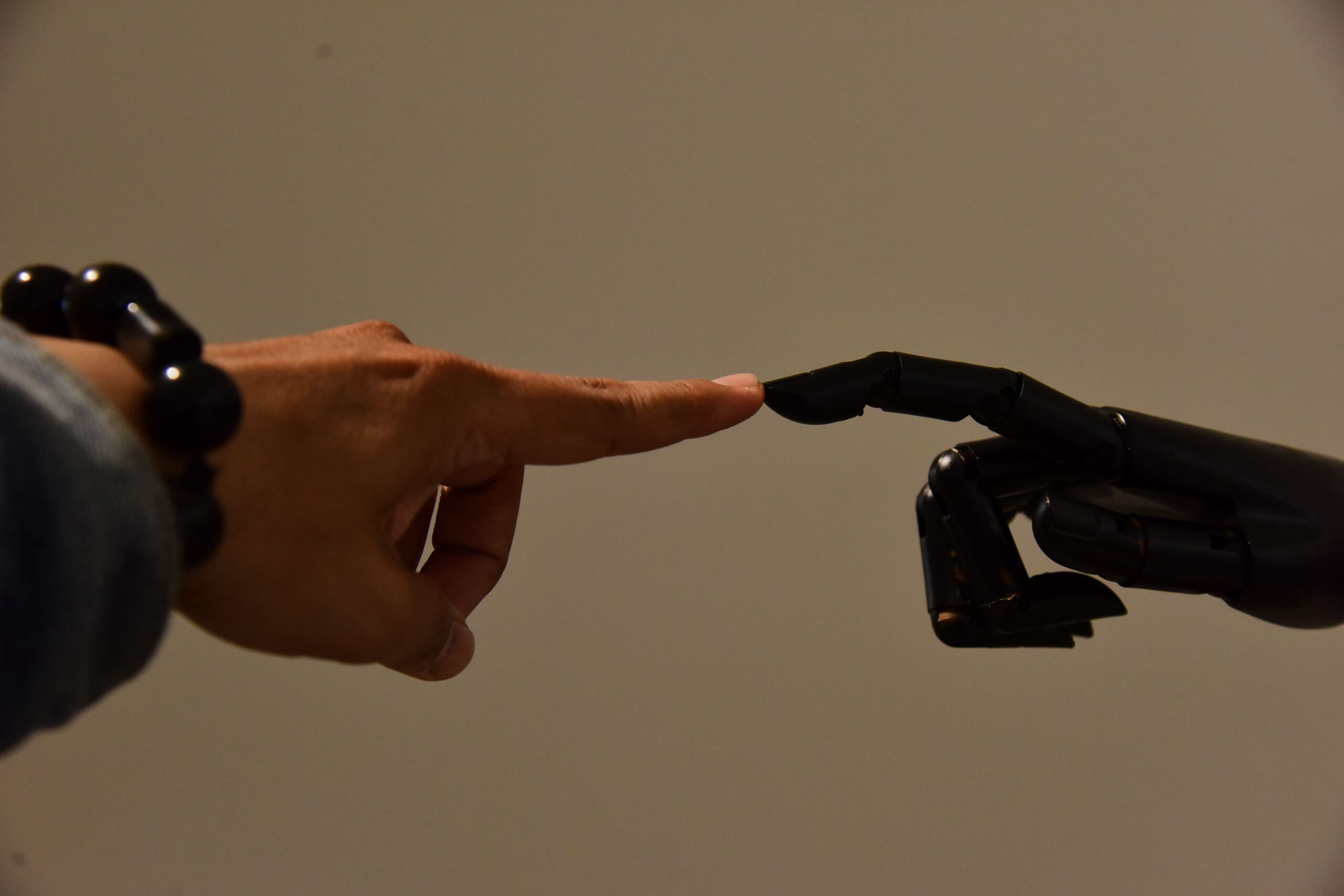
Importantly, that lack of feeling presents an opportunity for human workers wherein employees could learn more about how to ask better questions, evaluate AI outputs, make decisions, and contribute original ideas; as Dr. Ballo puts it, “One thing that makes humans really special is the ability to be creative and the ability to be innovative. AI cannot do that.”
Dr. Ballo is not alone in expressing this belief. Sophiane Arras, CEO of InStorify, similarly notes how important it can be to use AI with balance and intention, particularly when it comes to bearing in mind specifics that AI may not be able to account for.
“The best performing [retailers],” he explains ”are the ones that would really be, ‘okay, but my demography is specific. I’m in that specific street near a bakery, near that. And so I need to do this specific [thing].’”
Sophiane adds that “We never tell [retailers], ‘you should have this one’, say, ‘here is what we suggest.’ Because we know that the last touch is the right touch, and the last touch is the human touch.”
AI is capable of handling logistical elements like scaling and managing repetitive tasks, yes, but as Sophanie points out, it lacks the creative thinking skills needed to fully appreciate something like a buyer’s experience: “At the end, you go to a physical store because you like more than just the products, you like the experience, et cetera.” By merging the “doing” of AI and the “thinking” that people are capable of, businesses of all kinds may be able to support the best of both worlds.
Combining Automation With Human Judgment
Discussions about AI’s future in the workplace remain active and fluid. Still, one idea has become clear: AI may be best suited to take on the repetitive parts of daily operations so people can spend more time applying human judgment and creativity.
AI can and ought to be a time-saving tool that expands what individuals and teams can accomplish. Rather than replace people, AI-powered workflows could redistribute human effort toward areas that benefit most, allowing companies to spend more time and resources on tasks outside the dreary realm of busywork.